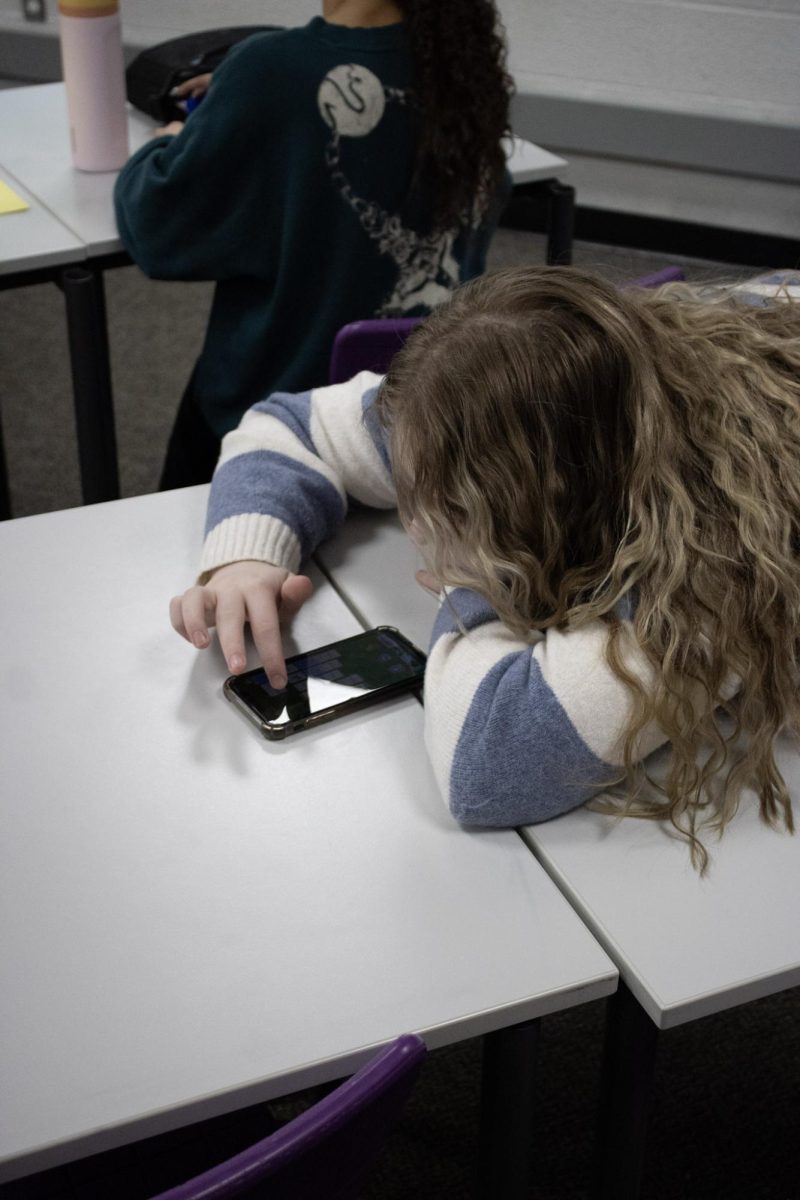
It is well known that teens worldwide are distracted by cell phone use, especially in high school. With the growing use of social media, AI assistants, and new apps every day, more and more addictions appear every minute. All of this is soon to end, with a new statewide ban taking effect in the 2026-27 school year.
The bill, originally sponsored by Republican representatives Nancy DeBoer, Kathy Schmaltz, and Mark Tisdel, was introduced on February 26th, 2025. After receiving bipartisan support from both the House and Senate, on Tuesday, February 10th, 2026, Governor Gretchen Whitmer signed ‘House Bill 4141’ into law. The new Michigan law restricts student cell phone use during the school day and is set to change daily routines at Concord High School. The legislation, recently signed by the governor, aims to reduce classroom distractions and improve student focus. Schools across the state will now be required to limit how and when students can use their phones during school hours.
Under the new law, districts must implement policies that restrict cell phone use during instructional time. While specific rules may vary by district, the goal is to minimize disruptions and create a more focused learning environment. Exceptions may be made for medical needs or other approved circumstances.
At Concord High School, administrators are working to determine how the policy will be enforced and what it will look like in classrooms this fall. Some possibilities include requiring phones to be stored in lockers or backpacks during class.
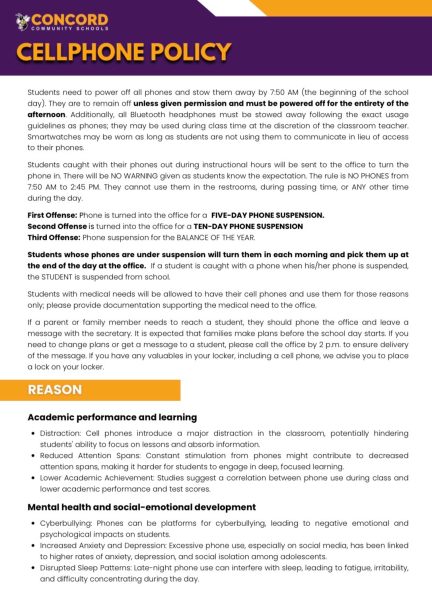
Concord High School’s Principal, Jill Snyder, says, “We are currently reviewing what consequences will look like. As of right now, our policies consist of a 3 strikes, First offense, said students’ phone will be turned in to the office for a 5 Day Phone Suspension, second offense, phone is turned in for a 10-Day Phone Suspension, after students’ third offense, the phone suspension will remain for the balance of the year.” Concord has always had a no-phone policy, which was mildly followed and not strongly enforced. Next year, consistent reinforcement will have a more significant effect.
Supporters of the law say limiting phone use will help students stay engaged and improve academic performance. Many teachers have expressed concerns in recent years about how phones can interrupt instruction and reduce participation.
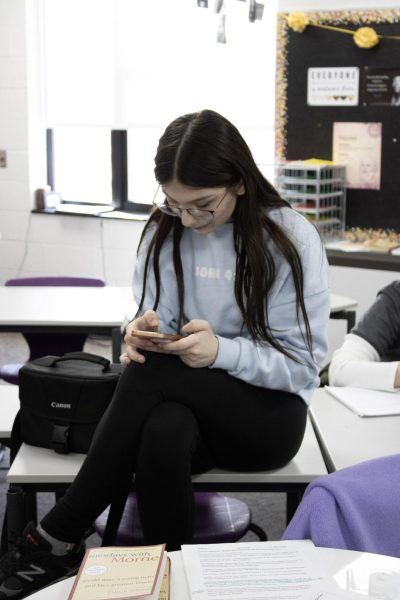
A teacher at CHS, Mrs.Jessica Osterhout, has expressed her feelings toward cell phones before states, “I hope that kids won’t be afraid to be kids again, and less dependent on their devices, and spend more time interacting with each other. Hopefully, it will make kids more comfortable to do things like participate in pep assembly games without the fear of being recorded, and help them feel free to have some fun and be silly with each other. In the classroom, I really hope it will help students be more engaged in what is happening in front of them, and we won’t have to compete with the tiny computers in their pockets. ”
However, not all students are in favor of the change. Some worry about losing access to their phones during the day, especially when communicating with parents or checking schedules.
Haley Stimer is a junior at CHS and a scholar-athlete. Stimer states, “I think it can be a great thing and a bad one all at the same time. Some classes require phone use and can be extremely helpful. A lot of things are blocked off, such as school-owned technology that is helpful to access for everyday school work, but it will help students stay more focused on learning throughout the school day.” Cell phones have become a distraction, but they are also used as a tool to help students.
Parents and community members also have mixed opinions. While some believe the policy will encourage face-to-face interaction and a stronger focus, others have raised questions about enforcement and emergency communication.
Rakai Hill’s mom, Michelle Jones, is not a fan of the state banning cell phones in the classroom. Ms.Jones states, “I’m not a supporter of this ban. Because there are too many things happening in the world right now. I would ultimately feel more comfortable with my child, and really all children being able to have her phone present on her in classrooms.” Lots of parents are worried about the safety of their children without their cell phones. Today’s world is dominated by technology, and it is a huge part of the way people communicate with each other at all times.
Chriss Adams is the School Board Vice President for Concord Community Schools and has spoken out about these concerns that parents may have. “I feel our administrators take the safety and concerns of our students, parents, and their safety with the utmost importance. We must communicate effectively and clearly, explain the reason why this is being implemented, and ensure parents are clear on the process of communicating with their students. I believe Concord has always done a good job at ensuring our students are safe. As a parent, I would still feel nervous about not having the ability to contact my child whenever I wanted, and that is to be expected. Both of my kids have graduated from Concord, and I was on edge at times when I couldn’t reach them. I feel that once we work out the initial kinks that are bound to pop up, things will run smoothly. A little patience from administrators to parents and parents to administrators will go a long way. I feel it is also important for parents to look at the benefits this may bring and give it a chance to work.” While parents are bound to be skeptical about this, this highlights that the district cares very deeply about its students and also understands the way parents may feel. Concord will always do its best to keep its students safe at all times.
As Concord High School prepares to adjust to the new law, students and staff alike will be watching closely to see how it affects the school day. Whether welcomed or resisted, the policy marks a significant shift in how technology is used in Michigan classrooms.